
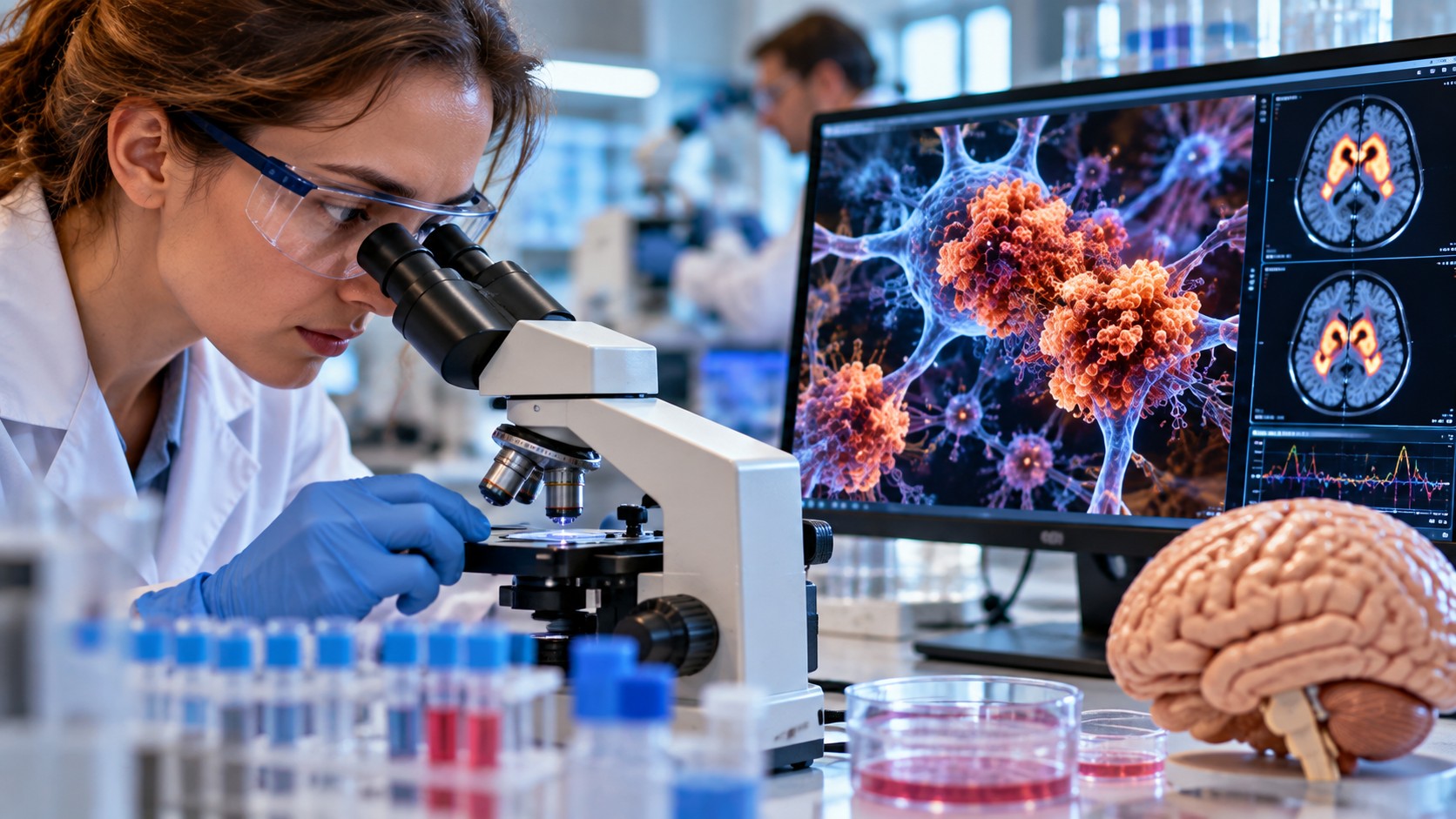
A protein that normally participates in the inner workings of nerve cells has become one of the most closely studied molecules in Parkinson’s disease research. Alpha-synuclein is not simply a laboratory marker. Its behavior, accumulation and interaction with neurons may help explain why particular brain cells become vulnerable and why restoring those cells is more complicated than replacing a missing population.
For researchers developing cellular strategies, understanding alpha-synuclein could therefore be essential. The question is no longer only whether new neurons can be introduced into the brain, but whether those cells can function within a biological environment affected by the processes associated with the disease.
What Makes Alpha-Synuclein Important?
A normal protein with a complicated role
Alpha-synuclein is naturally found in neurons, particularly around structures involved in communication between nerve cells. Under normal conditions, it is associated with synaptic function and the regulation of neurotransmitter release.
The problem arises when its behavior changes. Misfolded or aggregated forms of the protein can accumulate inside neurons, contributing to structures known as Lewy bodies and Lewy neurites. These abnormalities are strongly associated with Parkinson’s Disease and several related neurological disorders.
Scientists continue to investigate exactly how alpha-synuclein contributes to neuronal injury. It may interfere with cellular transport, mitochondrial function, synaptic communication and other processes essential for neuronal survival.
Why Alpha-Synuclein Changes the Cell Therapy Question
Replacement does not automatically mean restoration
At first glance, replacing dopamine-producing neurons might seem like a straightforward solution to neuronal loss. Yet newly introduced cells would enter a brain affected by the underlying disease biology.
If pathological alpha-synuclein processes remain active, transplanted neurons could potentially encounter the same environmental factors that contributed to the degeneration of the original cells.
This is one reason Parkinson’s Disease stem cell treatment research increasingly considers the biological environment alongside cell replacement. Scientists need to understand whether transplanted neurons can remain healthy and functional over the long term, rather than focusing exclusively on whether they survive immediately after transplantation.
Can Alpha-Synuclein Influence Transplanted Cells?
A question of cellular vulnerability
Research has raised important questions about whether abnormal alpha-synuclein can interact with or spread between cells. If pathological forms can move through neural networks, the implications for cell replacement become particularly significant.
A transplanted population might initially function well but face different challenges over time. Researchers are therefore studying the characteristics that could make replacement neurons more resistant to disease-associated stress.
This includes examining cellular maturation, protein handling, mitochondrial health and mechanisms involved in clearing damaged proteins.
Beyond Replacing Dopaminergic Neurons
The surrounding environment deserves attention
Parkinson’s disease is not caused by a single molecular event. Neuroinflammation, oxidative stress, mitochondrial dysfunction and changes in cellular signaling may all contribute to neuronal vulnerability.
Alpha-synuclein interacts with this broader biological environment. For this reason, future cellular approaches may need to consider more than the identity of the transplanted cells.
The research direction supported by organizations working in regenerative medicine is increasingly interdisciplinary. At STEM PLUS, clinical cellular medicine is combined with biotechnology and laboratory-based capabilities, allowing cellular approaches to be considered within a wider scientific framework. The organization’s work can be explored through stemplus.clinic.
The objective is not to assume that one cellular intervention can solve every aspect of neurodegeneration. Instead, laboratory findings can help define which biological mechanisms deserve attention before potential therapeutic strategies are evaluated clinically.
What Researchers Need to Understand Before Long-Term Success
Survival is only one measurement
A transplanted cell surviving in the brain does not necessarily mean that it has restored meaningful neurological function.
Researchers must also consider whether the cell develops the intended identity, produces appropriate levels of dopamine, establishes useful connections and remains stable over time. Alpha-synuclein adds another layer to this assessment because protein aggregation may affect neuronal health long after transplantation.
This makes long-term observation particularly important in the development of Parkinson’s Disease cell therapy approaches.
Could disease biology shape patient selection?
The presence and characteristics of alpha-synuclein-related pathology may eventually become relevant to how patients are evaluated for experimental cellular strategies. Different stages and biological patterns of disease could potentially influence treatment objectives.
However, this remains an active area of investigation. Alpha-synuclein is an important research target, but it should not be treated as a simple diagnostic or predictive marker for individual treatment outcomes.
A More Complex Vision of Cellular Medicine
The future of cellular treatment for Parkinson’s disease may depend less on the idea of simply replacing what has been lost and more on understanding the environment in which replacement cells must operate.
Alpha-synuclein illustrates this challenge particularly well. It connects neuronal degeneration with questions about protein processing, cell-to-cell interactions and long-term cellular stability.
As research develops, scientists may increasingly combine neuronal replacement with strategies designed to understand or modify the biological conditions surrounding those neurons. That shift could help determine whether newly introduced cells can do more than survive—and instead participate meaningfully in the neural circuits responsible for movement.